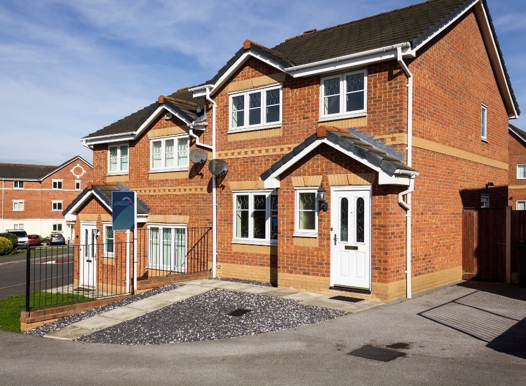
Most investors assume they need to build something purpose-designed or carry out extensive adaptations before they can enter the supported living sector. It’s one of the most common misconceptions we encounter — and for the vast majority of properties, it simply isn’t true.
In fact, for around 85–90% of the properties listed on the Gateway, zero adaptations are needed compared to a standard private rental. No ceiling hoists. No specialist bathrooms. No purpose-built layouts.
Just a decent, well-maintained home.
Where the Misconception Comes From
The image many people have of supported living — large converted facilities, old nursing homes, purpose-built wheelchair-accessible blocks — reflects only a small part of the sector. In reality, supported living encompasses a wide range of tenant groups, each with different needs. And for a significant proportion of those tenants, an ordinary residential property is exactly what’s required.
This misconception puts a lot of investors off before they’ve even started exploring the sector — which is a shame, because many of them already own properties that would be perfectly suitable.
What Most Supported Living Tenants Actually Need
The majority of supported living tenants are looking for something straightforward:
- A safe, secure, well-kept home
- Reasonable proximity to their support network, healthcare and community
- A stable tenancy that provides long-term security
That’s it. A terraced house, a semi-detached family home, a small bungalow — these are often exactly the kinds of properties that care providers are looking for. The goal is to help people live as independently as possible in a normal residential setting, not to house them in an institutional environment.
When Adaptations Are Needed
There are circumstances where adaptations may be appropriate or necessary — but these are the exception, not the rule.
If you are developing a new building from the ground up, or working with a care provider whose tenants have higher-level physical needs, it may make sense to incorporate accessibility features from the outset — things like step-free access, wider doorways, or specific adaptations agreed as part of a long-term partnership. Similarly, investors who are negotiating a bespoke arrangement with a particular provider might agree to certain modifications as part of the lease.
But for most investors getting started, these scenarios don’t apply. The key is to have an open conversation with a care provider about their specific requirements early on — and not to assume that costly modifications are needed before that conversation has even happened.
A Different Way of Adding Value
One thing that often surprises investors when they first explore supported living is that the value in this model isn’t created through renovation or development — it’s created through the lease agreement and the social purpose the property serves.
Rather than buying a rundown property to renovate and refinance, supported living investors are often looking for homes that are already in good condition and ready to move into. A well-presented, well-maintained family home can be exactly what a care provider needs — and the lease structure, rather than the bricks and mortar, is where the investment return is built.
Where to Start
If you have a property that’s already a comfortable, well-maintained home, you may already have exactly what a care provider is looking for. The best approach is to list it on the Gateway and let providers in your area tell you whether it meets their needs — rather than spending time and money on modifications that may not be necessary.
If you’re not yet sure whether supported living is the right strategy for your portfolio, or whether there’s demand in your area, we can help with that too. Our Area Appraisal service provides an in-depth look at local supply and demand, council frameworks, and the types of properties and rental levels you can expect.
The barrier to entry in supported living is lower than most people think. Sometimes, the right property is already sitting in your portfolio.
Find out more at supportedlivinggateway.com or get in touch at hello@supportedlivinggateway.com.